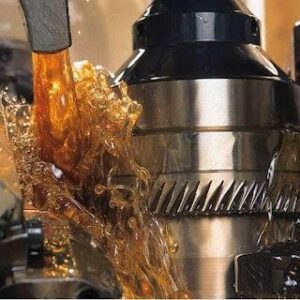

Corrosion Protection/Rust protection
Corrosion is the damage to metal by reaction with the environment when the conditions are favorable for corrosion like humidity/moisture, heat etc. Metal reacts with environment to form stable compounds which leads to pitting, structural weakness and disintegration.
Rust protection broadly kept in two categories
- Permanent Protection
Permanent protection is done through special treatment to parts or plating with corrosion resistant metals, or coating with paint, lacquer or enamels etc.
(2) Temporary Protection
By definition it is temporary protection for specified time period by applying temporary rust preventives. Many of the metallic parts, components, and finished machines produced by the manufacturing industries may have bare metal surfaces which require to be protected until brought into use, or receive interstage protection prior to further assembly or processing. These metallic parts need to be protected from corrosion during shipping or storage, or they may require some form of protection from corrosion whilst in use.
Rust preventive Oils (RPO) solvent based are mostly petroleum based products and used mainly for temporary rust protection.
Purpose : The purpose of temporary protection to provide protection when exposed to a variety of differing corrosive atmospheres, indoors, outdoors either under cover or fully exposed, in a marine environment, under effects of direct sunlight, perhaps in a radiation flux, in the presence of specific chemical corrosives in an industrial environment etc.
Function: The basic functions of rust preventive oils are broadly cover the following:
- Forms a protective barrier layer
- Not permanent layer – easy removability
- Protection under different environmental conditions.
- Compatible with later stage of production stage
- Additional functions: lubrication, cleaning, water removal.
Application: The RPO have various application for temporary protection which include the following:
- Steel profiles, sections and tubes
- Aluminium or other alloy strip and sections
- Machined parts and components either as finished items or for later assembly
- Tools and machine tools in manufacture, storage and supply
- Fasteners such as screws, rivets, bolts, etc
- Machinery parts, either finished or for later assembly
- Automotive components and sub-components
- Electrical parts and assemblies
- Construction and off-highway equipment
- Metal tanks, valves, and lines
- Agricultural parts and machinery
- Vehicles or machinery protected in shipment
- Assemblies of equipment, moth-balled for long or short periods
Types of rust Preventive Oils – Temporary Protectives
A number of different types of temporary protective are classified in BS1133:1991,Section 6.2, Protection of Metal against Corrosion during Transport and Shipment. Classification of Temporary rust and their Applications are given below:
A. Solvent based fluids: Coatings deposited on surfaces by the evaporation of solvents.
- TP 1 a – Deposits a hard film, quick drying
- TP 1 b – Deposits a hard film, slow drying
- TP 1 c – Deposits a hard film, slow drying– also displaces moisture from wet surfaces
- TP 2 a – Deposits a soft film following solvent evaporation
- TP 2 b – Deposits a soft film – also displaces moisture from wet surfaces
B. Soft Film, Grease-like, Non-solvent:
These protectives are particularly used for core protection of wire ropes, cables, and chains, where flexing will not result in breakage of the protective film; for these applications the protective also serves as a lubricant.
- TP 3 – Petroleum jelly, Vaseline â„¢ or petrolatum based materials, frequently
applied by hot-dip or by smearing or trowelling onto surfaces
- TP 4 a – Mineral oil based greases, usually smeared or trowelled onto surfaces to
give a thick film
- TP 4 b – Synthetic or vegetable oil based greases, non-mineral oil, applied by
smearing or trowelling, and applied in those applications where special
compatibility with sealants or adhesives is necessary
- TP 5 – Semi-fluid compounds, based on highly viscous oils, usually thixotropic to
control flow, and applied by smearing, or by hot-dip
C. Protective oils, Soft film type, Non-solvent.
The protective coating/rust preventive oils are applied by dip, spray brush or circulation. For larger applications, such as for instance, application of protective oils to metal strip at steel
mills, these fluids are applied by electrostatic spray, and therefore are designed to
achieve the correct electrical characteristics.
- TP 6 a – Protective, non-solvent oils, leaving a soft oily film. Applied by spray,
dipping, etc. May be thixotropic.
- TP 6 b – Oils for filling into sumps of equipment, engines, gearboxes, compressors,
etc., for protection whilst in storage or shipping
D. Strippable coatings.
These coatings are resin or plastic in consistency, usually of a heavy build, and removable by mechanical stripping, usually by hand. Commonly used for protection of hand tools during storage.
- TP 7 – Hot dip, strippable coatings, generally based on hot-melt resins and
plastics, and where the part is dipped into the hot melt
- TP 8 – Strippable coatings deposited from a solution of resins in rapidly drying
solvents, spray, brush or dip applied
E. Volatile Corrosion Inhibitors (VCI):
VCI products function by continuously releasing a vapour with powerful anticorrosion properties; on contact with metal the vapour is adsorbed onto the surface creating a film that will protect the metal from corrosion. The film is re-healing and self-replenishing through further vapour release.
- TP 9
- Paper.
- Polymer Film.
- Powders
- Powder Sachets.
- Tablets
- CI Oils Oil soluble VCI products
- Water Soluble VCI Products
F. Contact Inhibitors
- TP 10 – Contact inhibitors, consisting of chemicals to inhibit corrosion when in direct contact with metal surfaces
G. Water Based and Emusifiable Protective, usually mixed with water prior to use, applied by dip, spray or brush, and depositing an oily or waxy film after drying.
- TP 11 a Depositing oily film
- TP 11 b Depositing wax film
Solvent Based RP
The solvent based RP oils consist of film-forming ingredients dissolved in solvents to give mobile fluids at room temperature, on evaporation of the solvent a tough, abrasion-resistant film, capable of being handled without damage, is obtained. RPO consists of rust inhibitor and carrier. Rust inhibitor provides the chemical, and possibly mechanical protection of the metal parts and carrier ensures the efficient spread over the complete metal surface.
Solvent-based rust preventives form thin rust preventive films with the consistency depending on the inhibitor type. Due to the evaporating solvent the film normally appears much drier than with rust preventive oils. The evaporation speed correlates with the solvent flash point. Solvent based RP Oils are usually low viscosity oils , which together with appropriate additive treatment enables wet surfaces to be dewatered as part of the protective process. The typical characteristics of solvent based rust preventive oils are –
- Thin film
- Water displacement
- Transparent film
- Easy removable
Application
Solvent based fluids are usually applied either from a dip tank, by spray system, or by brushing. Items should not be wrapped or packaged until the film is dry.
Suitable applications of solvent based RP Oils include:
- camshafts, chains, crankshafts, cylinder liners,shackle pins, gudgeon pins, circular saws;
- larger sizes of: gears, spiral springs, taps and dies, nuts and screws;
- plug, ring and gap gauges;
- simple hand tools;
- exposed sliding surfaces of lathe beds;
- steel rod and bar;
- light steel sections.
Solvent-based rust preventive oils have special application concerns on the following points:
- Flash Point: The solvents used in rust preventive oils are usually light hydrocarbons, kerosene or white spirit fractions. Even lighter and sometimes more combustible solvents tend to be used for those products requiring a faster dry time. Hydrocarbon solvents are highly combustible/inflammable and always have a risk of combustion/fire. The safety hazards is a prime concern and the continuing trend to explore/use a higher flash point solvent to reduce the risk of combustion/fire.
- Health Hazards: Use of solvent based protective fluids in confined areas, and contact with the skin, can present health hazards.
- Volatile Organic Compounds: The solvents used in these protective fluids can be classed as Volatile Organic Compounds, and may cause photochemical smog. Legislation is in place to control the use of VOC’s, and government is actively promoting elimination or reduction.
- Removal/ Degreasing: Removal of the softer and lighter films is usually by conventional solvent or water based degreasing fluids. Hard, particularly heavy film coatings are usually removed by solvent based fluids. Sometimes the use of heat and/ or forced air circulation may be is required to speed up the removal process.
- Dip Tanks [ Concern – Solvent Evaporation ] – If applied by dip tank, users must be aware that the solvent in the tank system will gradually evaporate away, leaving a richer, more concentrated fluid which will tend to deposit an increasingly heavier coating. Large users should check the additive concentrations regularly, seeking advice from their supplier on any rectification required. Fire Safety measures should be at work place.
- Spray Systems – Seal Compatibility and Nozzle Blockage. Check that all parts of the spray are compatible: the drying solvent may affect elastomer seals or coatings. With heavier-build coating system, particularly the hard film materials, check that nozzles remain clear. Nozzles on sprayers that are used only intermittently are best cleaned after use with solvent, or blown through to clear.
Advantages /Disadvantages of Solvent Based RP Oils
Solvent based RP Oils have advantages of better protection in odd climate i.e. salty atmosphere/environment, shorter drying time and suitable for wider application. These oils have disadvantages like less stable film, safety hazard due to low flash point of solvent, difficulty in removing the protective film/cleaning and health hazard on long exposure.
To know more about Velvex range of Premium Rust Preventive Oils for Industrial applications, visit our website – https://www.velvex.in/industrial-lubricants
Contact us: 7304510910 / e-mail – subhojit.g@nandangroup.com
Top Industrial Lubricants Manufacturers and Suppliers-Velvex
Velvex manufacture and supplies the finest range of specialty, industrial lubricants, and mineral oils at a competitive price in India to improve productivity.
[5:16 PM] Sanjeev Kumar
Corrosion Protection/Rust protection
Corrosion is the damage to metal by reaction with the environment when the conditions are favorable for corrosion like humidity/moisture, heat etc. Metal reacts with environment to form stable compounds which leads to pitting, structural weakness and disintegration.
Rust protection broadly kept in two categories
- Permanent Protection
Permanent protection is done through special treatment to parts or plating with corrosion resistant metals, or coating with paint, lacquer or enamels etc.
(2) Temporary Protection
By definition it is temporary protection for specified time period by applying temporary rust preventives. Many of the metallic parts, components, and finished machines produced by the manufacturing industries may have bare metal surfaces which require to be protected until brought into use, or receive interstage protection prior to further assembly or processing. These metallic parts need to be protected from corrosion during shipping or storage, or they may require some form of protection from corrosion whilst in use.
Rust preventive Oils (RPO) solvent based are mostly petroleum based products and used mainly for temporary rust protection.
Purpose : The purpose of temporary protection to provide protection when exposed to a variety of differing corrosive atmospheres, indoors, outdoors either under cover or fully exposed, in a marine environment, under effects of direct sunlight, perhaps in a radiation flux, in the presence of specific chemical corrosives in an industrial environment etc.
Function: The basic functions of rust preventive oils are broadly cover the following:
- Forms a protective barrier layer
- Not permanent layer – easy removability
- Protection under different environmental conditions.
- Compatible with later stage of production stage
- Additional functions: lubrication, cleaning, water removal.
Application: The RPO have various application for temporary protection which include the following:
- Steel profiles, sections and tubes
- Aluminium or other alloy strip and sections
- Machined parts and components either as finished items or for later assembly
- Tools and machine tools in manufacture, storage and supply
- Fasteners such as screws, rivets, bolts, etc
- Machinery parts, either finished or for later assembly
- Automotive components and sub-components
- Electrical parts and assemblies
- Construction and off-highway equipment
- Metal tanks, valves, and lines
- Agricultural parts and machinery
- Vehicles or machinery protected in shipment
- Assemblies of equipment, moth-balled for long or short periods
Types of rust Preventive Oils – Temporary Protectives
A number of different types of temporary protective are classified in BS1133:1991,Section 6.2, Protection of Metal against Corrosion during Transport and Shipment. Classification of Temporary rust and their Applications are given below:
A. Solvent based fluids: Coatings deposited on surfaces by the evaporation of solvents.
- TP 1 a – Deposits a hard film, quick drying
- TP 1 b – Deposits a hard film, slow drying
- TP 1 c – Deposits a hard film, slow drying– also displaces moisture from wet surfaces
- TP 2 a – Deposits a soft film following solvent evaporation
- TP 2 b – Deposits a soft film – also displaces moisture from wet surfaces
B. Soft Film, Grease-like, Non-solvent:
These protectives are particularly used for core protection of wire ropes, cables, and chains, where flexing will not result in breakage of the protective film; for these applications the protective also serves as a lubricant.
- TP 3 – Petroleum jelly, Vaseline â„¢ or petrolatum based materials, frequently
applied by hot-dip or by smearing or trowelling onto surfaces
- TP 4 a – Mineral oil based greases, usually smeared or trowelled onto surfaces to
give a thick film
- TP 4 b – Synthetic or vegetable oil based greases, non-mineral oil, applied by
smearing or trowelling, and applied in those applications where special
compatibility with sealants or adhesives is necessary
- TP 5 – Semi-fluid compounds, based on highly viscous oils, usually thixotropic to
control flow, and applied by smearing, or by hot-dip
C. Protective oils, Soft film type, Non-solvent.
The protective coating/rust preventive oils are applied by dip, spray brush or circulation. For larger applications, such as for instance, application of protective oils to metal strip at steel
mills, these fluids are applied by electrostatic spray, and therefore are designed to
achieve the correct electrical characteristics.
- TP 6 a – Protective, non-solvent oils, leaving a soft oily film. Applied by spray,
dipping, etc. May be thixotropic.
- TP 6 b – Oils for filling into sumps of equipment, engines, gearboxes, compressors,
etc., for protection whilst in storage or shipping
D. Strippable coatings.
These coatings are resin or plastic in consistency, usually of a heavy build, and removable by mechanical stripping, usually by hand. Commonly used for protection of hand tools during storage.
- TP 7 – Hot dip, strippable coatings, generally based on hot-melt resins and
plastics, and where the part is dipped into the hot melt
- TP 8 – Strippable coatings deposited from a solution of resins in rapidly drying
solvents, spray, brush or dip applied
E. Volatile Corrosion Inhibitors (VCI):
VCI products function by continuously releasing a vapour with powerful anticorrosion properties; on contact with metal the vapour is adsorbed onto the surface creating a film that will protect the metal from corrosion. The film is re-healing and self-replenishing through further vapour release.
- TP 9
- Paper.
- Polymer Film.
- Powders
- Powder Sachets.
- Tablets
- CI Oils Oil soluble VCI products
- Water Soluble VCI Products
F. Contact Inhibitors
- TP 10 – Contact inhibitors, consisting of chemicals to inhibit corrosion when in direct contact with metal surfaces
G. Water Based and Emusifiable Protective, usually mixed with water prior to use, applied by dip, spray or brush, and depositing an oily or waxy film after drying.
- TP 11 a Depositing oily film
- TP 11 b Depositing wax film
Solvent Based RP
The solvent based RP oils consist of film-forming ingredients dissolved in solvents to give mobile fluids at room temperature, on evaporation of the solvent a tough, abrasion-resistant film, capable of being handled without damage, is obtained. RPO consists of rust inhibitor and carrier. Rust inhibitor provides the chemical, and possibly mechanical protection of the metal parts and carrier ensures the efficient spread over the complete metal surface.
Solvent-based rust preventives form thin rust preventive films with the consistency depending on the inhibitor type. Due to the evaporating solvent the film normally appears much drier than with rust preventive oils. The evaporation speed correlates with the solvent flash point. Solvent based RP Oils are usually low viscosity oils , which together with appropriate additive treatment enables wet surfaces to be dewatered as part of the protective process. The typical characteristics of solvent based rust preventive oils are –
- Thin film
- Water displacement
- Transparent film
- Easy removable
Application
Solvent based fluids are usually applied either from a dip tank, by spray system, or by brushing. Items should not be wrapped or packaged until the film is dry.
Suitable applications of solvent based RP Oils include:
- camshafts, chains, crankshafts, cylinder liners,shackle pins, gudgeon pins, circular saws;
- larger sizes of: gears, spiral springs, taps and dies, nuts and screws;
- plug, ring and gap gauges;
- simple hand tools;
- exposed sliding surfaces of lathe beds;
- steel rod and bar;
- light steel sections.
Solvent-based rust preventive oils have special application concerns on the following points:
- Flash Point: The solvents used in rust preventive oils are usually light hydrocarbons, kerosene or white spirit fractions. Even lighter and sometimes more combustible solvents tend to be used for those products requiring a faster dry time. Hydrocarbon solvents are highly combustible/inflammable and always have a risk of combustion/fire. The safety hazards is a prime concern and the continuing trend to explore/use a higher flash point solvent to reduce the risk of combustion/fire.
- Health Hazards: Use of solvent based protective fluids in confined areas, and contact with the skin, can present health hazards.
- Volatile Organic Compounds: The solvents used in these protective fluids can be classed as Volatile Organic Compounds, and may cause photochemical smog. Legislation is in place to control the use of VOC’s, and government is actively promoting elimination or reduction.
- Removal/ Degreasing: Removal of the softer and lighter films is usually by conventional solvent or water based degreasing fluids. Hard, particularly heavy film coatings are usually removed by solvent based fluids. Sometimes the use of heat and/ or forced air circulation may be is required to speed up the removal process.
- Dip Tanks [ Concern – Solvent Evaporation ] – If applied by dip tank, users must be aware that the solvent in the tank system will gradually evaporate away, leaving a richer, more concentrated fluid which will tend to deposit an increasingly heavier coating. Large users should check the additive concentrations regularly, seeking advice from their supplier on any rectification required. Fire Safety measures should be at work place.
- Spray Systems – Seal Compatibility and Nozzle Blockage. Check that all parts of the spray are compatible: the drying solvent may affect elastomer seals or coatings. With heavier-build coating system, particularly the hard film materials, check that nozzles remain clear. Nozzles on sprayers that are used only intermittently are best cleaned after use with solvent, or blown through to clear.
Advantages /Disadvantages of Solvent Based RP Oils
Solvent based RP Oils have advantages of better protection in odd climate i.e. salty atmosphere/environment, shorter drying time and suitable for wider application. These oils have disadvantages like less stable film, safety hazard due to low flash point of solvent, difficulty in removing the protective film/cleaning and health hazard on long exposure.
To know more about Velvex range of Premium Rust Preventive Oils for Industrial applications, visit our website – https://www.velvex.in/industrial-lubricants
Contact us: 7304510910 / e-mail – subhojit.g@nandangroup.com
[5:17 PM] Sanjeev Kumar
Many Auto manufacturers have slimmed down the Diesel Vehicle line up in the passenger car segment with BS6 Emission norms coming in, sighting the high production cost. However, the commercial vehicle industry still mainly complies with Diesel Engines maximizing the power output. While many commercial vehicle OEM’s have initiated CNG as an alternative fuel for small and medium vehicles the dependency on Diesel engines yet remains strong.
Knowing CK-4 Diesel Engine Oil and its application:
The new oil standard was developed to better protect new generation as well older engines (BS4 & BS3) improve engine oil performance, and help engine manufacturers meet 2020 government emissions standards of BS6.
API Service Category CK-4 describes oils for use in high-speed diesel engines designed to meet 2020 model year complying emission standards on-highway and for previous model diesel engines.
API CK-4 oils are designed to provide enhanced protection against oil oxidation, viscosity loss due to shear, and oil aeration as well as protection against catalyst poisoning, particulate filter blocking, engine wear, piston deposits, degradation of low- and high-temperature properties, and soot-related viscosity increase.
These oils are formulated for use in all applications with diesel fuels ranging in sulphur content up to 500 ppm (0.05% by weight). However, the use of these oils with greater than 15 ppm (0.0015% by weight) sulphur fuel may impact exhaust aftertreatment system durability and/or oil drain interval.
These oils are especially effective at sustaining emission control system durability where particulate filters and other advanced aftertreatment systems are used (DPF, SCR etc.)
Can API CK-4 Diesel Engine Oils be applicable for older Engines?
API CK-4 oils exceed the performance criteria of API CJ-4, CI-4 with CI-4 PLUS, CI-4, and CH-4 and can effectively lubricate engines calling for those API Service Categories.
Benefits of API CK-4:
API CK-4 diesel engine oils are low SAPS (Sulphated Ash, Phosphorus and Sulphur) diesel engine oils and the most suitable lubrication solution for new engines fitted with after treatment devices (ATD). Since commercial vehicles are largely run on diesel. To achieve stringent emission norms these vehicle are fitted with exhaust after treatment devices.
These exhaust after-treatment devices help in meeting the stringent limits of NOx and PM by converting them chemically into less harmful exhaust gases and by filtering out the harmful particulates. Diesel engines produce soot due to incomplete combustion of diesel fuel in the engine’s combustion chamber. To meet the stringent limits of BS VI emission norms for Particulate Matter (PM), diesel particulate filters (DPF) are fitted to the vehicle to filter out these soot particulates. As soot gets collected in the DPF, it gradually gets burned off, however, not completely. A proportion of these soot particles is comprised of unburned oil. These oil particles contain substances (such as some engine oil additives) which cannot be completely burned away and are therefore deposited as ash in the DPF. The ash can only be removed by physically cleaning the DPF.
Conventional diesel engine oils such as API CF-4, API CH-4, API CI-4 and even API CI-4 PLUS produce higher levels of ash and hence will not be suitable for or compatible with diesel vehicles, whether passenger or commercial, fitted with DPF and other ATD.